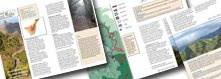
Last August (2009) we told you that the Barranco del Infierno was closed for a month for a wee bit of TLC. We also warned that a Tenerife month isn’t the same as a month in other places. Unfortunately time has proved that comment was somewhat of an understatement.
The bad news is that it’s now March 2010 and guess what? Hell’s Ravine is still shut.
Prompted by a comment on another blog I called the medio-ambiente people in Adeje to find out what was happening. Not only is the Barranco del Infierno still shut, details of when it is likely to re-open are as clear as a February day at Los Rodeos (i.e. not).
The medio ambiente person on the other end of the line mumbled something about verano (summer), but when I pressed he did a sort of soft shoe shuffle as he backed off adding ‘tal vez, tal vez’ (perhaps, perhaps).
In short, we don’t seem to be any further along since the last time I called them a few months ago.
To be fair, the torrential rains which affected some parts of the island in February, including Adeje, sent raging rivers rampaging through the island’s ravines. A lot of the work to improve the Barranco would have been destroyed, so in this case nature has to shoulder some of the blame rather than a lackadaisical approach to completing jobs on schedule (although, work was already months behind schedule before the storms hit, so they don’t get off scot-free).
Clearly this is bad news for walkers, but the good news is that although the Barranco del Infierno is a pleasant enough walk, it has become quite manicured and a bit like a hiking version of the TF1 motorway. If you’re someone who prefers their countryside a bit wilder and less populated, there are plenty of other great walks around the south of Tenerife which aren’t ‘closed for business’.
Monday, 15 March 2010
Wednesday, 24 February 2010
Walking on Tenerife – Instead of a Fly Drive Holiday, Try a Walk Drive One
When we wrote Real Tenerife Island Drives and Island Walks we wrote them independently of each other. The idea for a series of driving routes came about because we were constantly passing visitors to Tenerife who had hired a car, parked in lay-bys with a map spread over the dashboard, or worse – arguing furiously. Having travelled all over Tenerife on a regular basis for research purposes, we knew only too well that a map had limited value, and if driving through towns, was virtually useless.
Similarly with walking, we started writing walking routes because, as avid walkers, the ones we had tried to use were often more likely to get us lost than get us from A to B and many were simply quite a few years out of date.
However, we never really thought of them being used together until we noticed recently that more and more people were combining buying Island Drives with one or more of the Island Walks routes and we thought, ‘what a damned good idea…why didn’t we think of that?’
I suppose it’s an obvious way of getting the most out of the drive to the walking location. The Anaga Mountains are a perfect example of this. To get the best out of them really requires exploration on foot and by car (or bicycle if you opt for the green option…and are super fit).
The terrain is far too demanding to explore in great depth on foot over the course of a two week holiday. Yet there are places that can only be explored on foot like the fishing hamlet with no roads to it near Tenerife’s most easterly tip (we haven’t written a walking route for that one yet, but it’s in the pipeline) or the merchants’ trails linking tiny hamlets (which we do have routes for).
On the other hand, the road which runs along the Anaga’s spine isn’t ideal for walking along, but it does have spectacular views over both coasts and there are some excellent viewpoints worth stopping at for some breathtaking photos to impress the friends back home.
So to anyone out there who has bought Island Drives and Island Walks, you may just have pioneered a new concept in tourism, The Walk – Drive Holiday; the perfect way to get the most from car hire on Tenerife.
Similarly with walking, we started writing walking routes because, as avid walkers, the ones we had tried to use were often more likely to get us lost than get us from A to B and many were simply quite a few years out of date.
However, we never really thought of them being used together until we noticed recently that more and more people were combining buying Island Drives with one or more of the Island Walks routes and we thought, ‘what a damned good idea…why didn’t we think of that?’
I suppose it’s an obvious way of getting the most out of the drive to the walking location. The Anaga Mountains are a perfect example of this. To get the best out of them really requires exploration on foot and by car (or bicycle if you opt for the green option…and are super fit).
The terrain is far too demanding to explore in great depth on foot over the course of a two week holiday. Yet there are places that can only be explored on foot like the fishing hamlet with no roads to it near Tenerife’s most easterly tip (we haven’t written a walking route for that one yet, but it’s in the pipeline) or the merchants’ trails linking tiny hamlets (which we do have routes for).
On the other hand, the road which runs along the Anaga’s spine isn’t ideal for walking along, but it does have spectacular views over both coasts and there are some excellent viewpoints worth stopping at for some breathtaking photos to impress the friends back home.
So to anyone out there who has bought Island Drives and Island Walks, you may just have pioneered a new concept in tourism, The Walk – Drive Holiday; the perfect way to get the most from car hire on Tenerife.
Thursday, 4 February 2010
The Anaga Mountains: Real Tenerife's Favourite Place for Walking on Tenerife - But What did The British Guild of Travel Writers Make of them?
The first time we explored the Anaga Mountains we were completely seduced by their astoundingly dramatic beauty.
As we walked along narrow trails through a lush valley, where we passed a few goats then a lone cottage where a smiling old woman in a straw hat tended her flower-filled garden, a thought occurred. If you dropped someone who has never been to Tenerife (or even plenty who have, but have never made it beyond the beach) into this remote wilderness without telling them where they were, you could let them have a hundred guesses and they’d never get it right.
The Anaga’s are by far our favourite place for walking on Tenerife, but because of their location they are still too far off the tourist trail for most visitors, even those who enjoy hoofing it around the countryside on foot.
We’ve been banging about how incredible the Anaga Mountains are for years. Even the walker’s paradise of neighbouring La Gomera can’t compete with what the Anaga Mountains have to offer in my opinion. And you’ve got the added bonus of having the wonderful cities of Santa Cruz and La Laguna within easy distance. These extreme contrasts found in the north east tip of Tenerife represent the best of the real Tenerife.
But we’re biased northerners, so it was with interest that we followed the British Guild of Travel Writer’s tweets on Twitter as they swapped the surreal luxury of the Gran Hotel Bahía del Duque and other 5 Star hotels in Costa Adeje, the newest part of Tenerife, for goat trails and laurisilva forests in the oldest part of Tenerife. Here’s what some of them had to say:
“Changed my mind about Tenerife. Stunning scenery & amazing downhill walk in Anaga Mtns & rainforest. Must go back.”
“Had a fab walk in Anaga's laurisilva forest y'day. Robins and wagtails galore.”
“Magnificent walk in Anaga rain forest.”
“Loved today's walk through the beautiful Anaga laurisilva in NE Tenerife.”
“Hike in Anaga was great yesterday, particularly views of sea and village towards the end. Bit steep for some though.”
“Very impressed with the hiking in Tenerife's remarkable north.”
So there you have it, we’re clearly not alone in our views. The Tenerife Tourist Board pulled a master stroke by taking the British Guild of Travel Writers to a place where life continues much as it has done for centuries.
If you want to show visitors an area of Tenerife which is guaranteed to confound preconceived ideas, you couldn’t choose better than the Anaga Mountains.
Tuesday, 26 January 2010
Visions in Pink - The Almond Trees of Santiago del Teide, Tenerife
The Santiago del Teide Valley is an uplifting place to walk at any time of the year – old farmers in fedora hats stop their backbreaking work tending fields to wave as you walk by, old women in straw hats gossip on the corners of a small hamlet and the scenery shifts from gentle agricultural lands to pine forest to bizarre volcanic formations – but in January and February it is positively magical.
This is the time when the almond trees blossom and fill parts of the valley with their delicate pink flowers. They are a beautiful if short-lived sight to behold and make exploring the area that little bit more special.
For anyone who’s lucky enough to be on Tenerife during this blooming marvelous time and who wants to discover the charms of the Santiago Valley for themselves our ‘Into the Valley’ walking route traverses much of the valley.
Tenerife Island Walks are always a real joy to put together and the Santiago del Teide Valley route was no exception. The routes which follow former merchant and Guanche shepherd trails have some moments where the scenery is so stunning it could almost knock you on to your backside. Standing overlooking the valley with the road snaking to Masca on the opposite valley wall and La Palma, La Gomera and occasionally El Hierro floating on the horizon comes as a standard 'WOW' moment on this walk.
At this time of year, the flowering almond trees are just an added bonus.
The Santiago del Teide council organizes guided ‘Ruta del Almendro en Flor’ (Almond Trees in Flower Route) each February. This year’s takes place on the 6th, but such is the popularity that it’s already full – however, it does give you an idea of around which date the locals consider it best to view the almonds in flower.
This is the time when the almond trees blossom and fill parts of the valley with their delicate pink flowers. They are a beautiful if short-lived sight to behold and make exploring the area that little bit more special.
For anyone who’s lucky enough to be on Tenerife during this blooming marvelous time and who wants to discover the charms of the Santiago Valley for themselves our ‘Into the Valley’ walking route traverses much of the valley.
Tenerife Island Walks are always a real joy to put together and the Santiago del Teide Valley route was no exception. The routes which follow former merchant and Guanche shepherd trails have some moments where the scenery is so stunning it could almost knock you on to your backside. Standing overlooking the valley with the road snaking to Masca on the opposite valley wall and La Palma, La Gomera and occasionally El Hierro floating on the horizon comes as a standard 'WOW' moment on this walk.
At this time of year, the flowering almond trees are just an added bonus.
The Santiago del Teide council organizes guided ‘Ruta del Almendro en Flor’ (Almond Trees in Flower Route) each February. This year’s takes place on the 6th, but such is the popularity that it’s already full – however, it does give you an idea of around which date the locals consider it best to view the almonds in flower.
Sunday, 3 January 2010
Walking on Tenerife - Teide National Park
When your husband has insisted on buying a turkey large enough to feed a family of six and then cooked it to perfection, there’s only one thing to do the next day and that’s climb the highest peak you can reasonably get to and back before darkness falls.
So it was, with a bellyful of turkey and mince pies, that we drove to the Teide Parador last Saturday and headed off to climb Guajara, the highest section of the remaining crater wall.
We’d tried this walk before and had missed the turn off because some thoughtless hiker had chosen to take a break by leaning against the directional signpost, thus obscuring it from view. We walked all the way to the start of the Vilaflor pine forests before realising our mistake and re-tracing our steps but by then, we were too tired to make it all the way to the summit.
I’d been waiting for a chance to finally get there ever since.
It was a perfect day; the sky was the sort of blue that when you see it in holiday brochures you just know it’s been Photoshop’d, and the crater was wearing its most vivid of winter hues. The air temperature in the National Park was about 11°C and the wind chill factor was bringing it down to about 9°C but the sun was hot and within minutes of walking, I’d shed my fleece and was down to a T shirt and shorts.
I remembered the first ascent of 175 metres as being quite strenuous but then last time we did it, the crater was filled with snow and ice which made the path a bit treacherous in parts. This time, I was pleased that it only took 30 minutes to get to the ridge.
No mistakes this time, despite a couple of hikers once again resting right where the directional sign was, we turned up into the final Guajara ascent. The path was eroded from recent heavy rains and it was hard going. At times the path disappeared completely before re-emerging a few yards further on. By the 50 minute stage I’d lost the feeling in my hands and legs; my hands because the temperature was now down to an icy 2°C and my legs because they were so tired from altitude walking.
Another 10 minutes and we emerged at the summit, 2715 metres above sea level, and the whole crater opened up below us. It was awesome.
We sat on the little stone benches and ate our sandwiches (turkey – naturally) completely hypnotised by the beauty of the mountain cradled in its kaleidoscopic setting dotted with shimmering lakes beneath a blindingly blue sky.
Nowhere else on this planet can you walk in such an astonishing landscape and witness the drama of nature’s explosive past from your vantage point above the clouds. It’s a humbling experience.
But when you do it, please choose your rest spots carefully and don’t inadvertently ruin another hiker’s day…happy trails and Happy 2010!
Sunday, 20 December 2009
Sunday Strolling
The eastern coast of Tenerife is the part that every visitor sees as they whiz along the TF1 motorway from the airport to their resort, and back again. Very few visitors ever spend any time there which means that, when it comes to walking, you’re quite likely to have the whole place virtually to yourself.
Last Sunday we wanted to do a short walk with a friend of ours who lives in the south of the island. The weather had been cloudy and damp just about everywhere on the island and the forecast was for more rain so we wanted somewhere that was a) our best shot at catching dry weather b) somewhere half way for us each to travel and c) in or around 2 hours maximum with a nice restaurant in which to end with lunch.
There was just one place that fitted the bill perfectly; the Güímar Malpaís.
Starting at the little port of El Puertito, we ambled across the badlands alongside the sea amidst great swathes of tabaiba, cardón and sea lettuce. In the spring and summer, the grasses are tall and green but in winter they’re brown and wispy, rippling the landscape in the breeze.
Crossing the lava fields we headed inland to Montaña Grande and skirted the base before heading back on a different route to the fish and seafood cafes and restaurants of Puertito. An idyllic little 2 hour circular stroll with views along the coast northwards to Las Teresitas beach and Santa Cruz and southwards to the lighthouse at Poris de Abona.
And if you’re staying in the south of the island, there’s a fantastic drive that takes you to El Puertito along the old Forgotten Road so you can combine touring with walking…perfect.
Labels:
Hiking Tenerife,
Tenerife Walks,
Walking Routes,
Walking Tips
Thursday, 10 December 2009
Walking on Tenerife: Using Public Transport or Hiring a Car on Tenerife
When we first travelled abroad, we used to go on all the excursions available. I loved getting to see all sorts of interesting things, but hated being herded about and eating mediocre meals.
Within a few years we dumped the excursions, bought guide books and set off on our own. If it was in Europe, we’d hire a car, if it was further afield we’d use whatever public transport was available - tuk, tuks, trains, dhows, river taxis and even the occasional elephant. Instead of simply sightseeing we started having adventures. The experience was worlds away from the world of organised excursions.
The bus network on Tenerife is excellent in my opinion. Although we both drive we use it regularly if we’re going into Puerto de la Cruz or Santa Cruz for a night out, or to and from the airport, or the port at Los Cristianos if we’re travelling to La Gomera. Buses are cheap and on the whole reliable and if you’re planning on walking, you can get to many good walking areas by public transport. For example, if based in Puerto de la Cruz, a regular bus service will transport you into the heart of the pine forest in the upper La Orotava Valley. If you’re in the south west around Los Gigantes, the bus to Puerto drops walkers off at the Fleytas bar where there are a number of classic routes to explore.
But, and this is a giant sized ‘but’, if you’re the sort of person who relishes exploring the most remote corners of the places you visit, the less populated an area, the less likely it is to have a regular bus service. The most spectacular route to Mount Teide isn’t on a bus route because no-one lives along most of it.
I read a post on Tripadvisor recently from someone who had been to La Gomera. He said that it was completely different from Tenerife and that it was probably what Tenerife was like before tourism. He was wrong about that. The Anaga Mountains with their tiny agricultural hamlets are exactly like La Gomera; if anything, they make La Gomera look over developed. But some of the spectacular walks there are more or less ‘out of bounds’ to someone using public transport, so for many visitors there are great swathes of Tenerife which remain ‘hidden’.
For me that’s where the car wins hands down. Hirting a car on Tenerife opens up the whole island rather than just part of it.
Within a few years we dumped the excursions, bought guide books and set off on our own. If it was in Europe, we’d hire a car, if it was further afield we’d use whatever public transport was available - tuk, tuks, trains, dhows, river taxis and even the occasional elephant. Instead of simply sightseeing we started having adventures. The experience was worlds away from the world of organised excursions.
It’s probably a safe bet to assume that if you’re reading this blog and you’re interested in walking on Tenerife, you are the sort of person who enjoys setting out under their own steam whether it’s by car or by local bus (sorry, no elephant transport here, although there are camels). But which depends on personal preferences and on what areas you hope to explore when you visit Tenerife.
The bus network on Tenerife is excellent in my opinion. Although we both drive we use it regularly if we’re going into Puerto de la Cruz or Santa Cruz for a night out, or to and from the airport, or the port at Los Cristianos if we’re travelling to La Gomera. Buses are cheap and on the whole reliable and if you’re planning on walking, you can get to many good walking areas by public transport. For example, if based in Puerto de la Cruz, a regular bus service will transport you into the heart of the pine forest in the upper La Orotava Valley. If you’re in the south west around Los Gigantes, the bus to Puerto drops walkers off at the Fleytas bar where there are a number of classic routes to explore.
But, and this is a giant sized ‘but’, if you’re the sort of person who relishes exploring the most remote corners of the places you visit, the less populated an area, the less likely it is to have a regular bus service. The most spectacular route to Mount Teide isn’t on a bus route because no-one lives along most of it.
I read a post on Tripadvisor recently from someone who had been to La Gomera. He said that it was completely different from Tenerife and that it was probably what Tenerife was like before tourism. He was wrong about that. The Anaga Mountains with their tiny agricultural hamlets are exactly like La Gomera; if anything, they make La Gomera look over developed. But some of the spectacular walks there are more or less ‘out of bounds’ to someone using public transport, so for many visitors there are great swathes of Tenerife which remain ‘hidden’.
For me that’s where the car wins hands down. Hirting a car on Tenerife opens up the whole island rather than just part of it.
Subscribe to:
Posts (Atom)