This is connected to our recent post about trusting directions whilst walking on Tenerife. Our friend who commented about our blogs where we followed paths that took us on the road to nowhere said something else interesting that made me think.
She commented that we mentioned things that if you’ve spent a lot of time walking around Tenerife’s countryside, you hardly register. She’s absolutely spot on. Spend a lot of time hiking on Tenerife and you become very familiar with the island’s little ‘quirks’. (Read the full feature at our new website)
Showing posts with label Walking Tips. Show all posts
Showing posts with label Walking Tips. Show all posts
Tuesday, 20 July 2010


Monday, 31 May 2010
Walking on Tenerife – all that glistens is not gold.
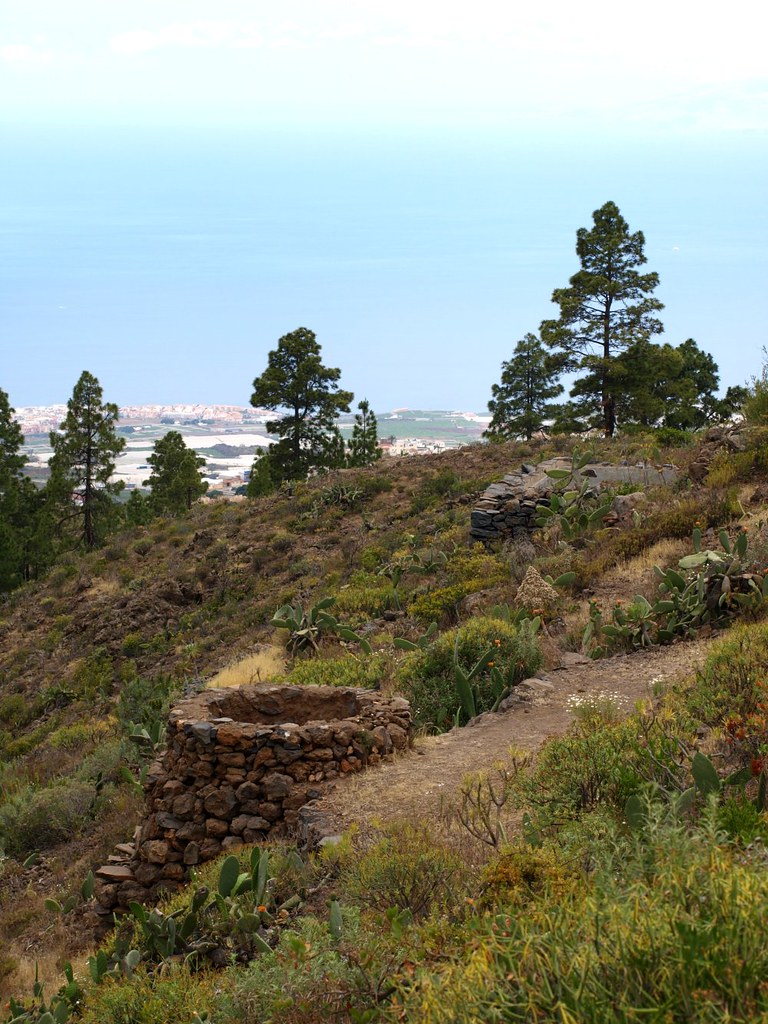
We knew that there was an old trading path running from somewhere around Guía de Isora up into the hills so last week we set off to find it. We were working off information supplied by the Ayuntamiento (Town Hall) which, as usual, was reprinted on a regular basis without anyone checking if it was still current.
Consequently, the start of the route had long since disappeared, replaced by new roads and walls.
After a precipitous false start and some hesitant exploration, we finally found the route and once we were on our way, were pleasantly surprised to find that it was in fact well signed and easy to navigate. At multiple path junctions, signposts gave good directions and distances, routes were way-marked with painted stripes and there were even information boards at various points, showcasing other routes.
Having enjoyed and chronicled a lovely, rural, circular route we emerged back into Guía alongside someone’s house, at the bottom of a dead end, accessed via a series of climbs, twists and turns through housing estates, with not a single signpost to mark it. Had we been looking to start the walk from that side, we would probably still be wandering around Guía now.
That same afternoon we drove further up into the hills to do a short(ish) route at the start of which a brand new, fancy sign had been erected by the Cabildo (Island Government).
Within metres of setting off from the sign, we were unsure of which way to go, our indecision hampered by two small dogs growling and snapping at our heels. Once we’d found an overgrown semblance of a path, it split off in different directions constantly with no marker signs for guidance. Although we were alongside a steep barranco (ravine) and so our direction was pretty obvious, finding the way through was proving to be impossible.
After aborted attempts to drop down dodgy trails on the side of the barranco, we finally found our path completely blocked by two parked vans alongside a house. Re-tracing steps; trying different trails and even asking a couple of locals all amounted to nothing. We finally gave up, tired and frustrated with feet embedded with sharp seed heads from wading through the tangled mass of undergrowth.
The Medio Ambiente (Environmental Department) had clearly decided to re-open the path and had begun by putting up the fancy sign. When, or if, they’ll get round to re-claiming the path from man and nature and giving it clear markings is anybody’s guess.
The moral of this tale is that, on Tenerife, you can’t tell a walk from its signpost.
Walking routes for the south west coming soon…
Wednesday, 26 May 2010
Walking on Tenerife – Those Boots Were Made For Walking

Their first outing was to Kenya where they seemed just the ticket for exploring Tsavo East on foot. The reality though was that, as walking boots go, they turned out to be a complete bust. They might have looked the part, but just walking from the safari lodge bar to a table overlooking a watering hole with a G&T (don't actually drink the stuff, but it did seem appropriate) to enjoy sunset was enough to bring up a blister. In the end I carried them around Kenya instead of them carrying me.
Since then I've learned to choose my footwear carefully when it comes to buying shoes for practical reasons; something that when you're tackling Tenerife's diverse range of landscapes is a far more sensible approach.
Footwear for Walking on Tenerife
My number one walking boots for donkey's years have been a trusty pair of brasher's, similar to their current Hillmaster boot. I brought them from Britain with me and they've proved equal to the task of tackling all of Tenerife's terrains from the sliding volcanic scree on the way to the summit of Mount Teide to pine covered forest floors in the forests of the Orotava Valley and icy slopes in Las Cañadas del Teide.
These sort of sturdy boots are good all rounders for exploring the island on foot. But mine can feel quite heavy in the summer months when the temperature rises off the scale and boots like the brasher can make my feet feel as though they're a wee bit overdressed.

I couldn't find a suitable replacement until I spotted what looked like an almost identical pair of sandals in my local supermarket at a fraction of the price. To be honest I didn't expect much of them and tried them out on a short coastal walk around Las Ramblas in Los Realejos to see how they'd hold up. It turned out they felt no different from my old Merrells and two years later they're still going strong. They were an incredible bargain considering they cost me €2.99.
Recently I added another addition to my walking footwear stable, a pair of Quechua lightweight walking shoes. I could feel my feet sigh with joy as I tried them out for the first time on a trek last week. The temperature was hovering around 30 degrees and the terrain was more uneven than I'd expected with a couple of steep ascent/descents but the shoes stuck to the path as though they had solvent on them. After 15 kilometres my feet and the shoes were still best of mates.
The only downside was that they were so comfortable that at the end of the walk I was denied that delicious pleasure of peeling off my boots and walking socks and slipping them into an airy pair of sandals to let them breathe a sigh of relief.
It was only their first outing, they'll get the second tomorrow, so it'll be interesting to see how they hold up over the long term.
They won't be sturdy enough for the most serious walks like climbing Teide, or even the muddy Anaga paths after the winter rains, but it looks as though the brashers are going to get a well earned rest over the summer.
Friday, 21 May 2010
Walking on Tenerife – Into the Unkown; South West Tenerife

I get excited by the thought of walking in areas that you rarely hear mentioned, so when we parked the car in a hamlet above Tenerife's south west and headed to what we had worked out would be the start of the new walking route we were researching, I had mixed emotions when we were faced with a shiny new board with information about the route.
I say mixed emotions because on the one hand I wanted to feel we were exploring territory which is generally ignored even by the island's most enthusiastic walkers. On the other it was good to see that the local council were recognising that walking on Tenerife has enormous potential and providing signs to help walkers find their way around this wonderfully diverse island is a step in the right direction.
Within a hundred yards we realised that whilst the board was a step, it was a baby-sized one. Ahead of us were three paths; none signposted. It turned out that the signpost at the start of the route was the one and only signpost along an old merchants' trail which skirted abandoned houses and terraces, with potential paths leading off in various directions along the way.
Six years ago, when we first started exploring Tenerife on foot, I'd have been flummoxed by the lack of clarity regarding the way ahead. But experience since then of not relying on signs, trusting our instincts, and learning to spot the merest hint of a path hidden by the overgrown undergrowth has made us a bit wiser. I say a bit - there are still times when Tenerife's maze of trails confound, that's when the old compass comes in handy.
As it happened we successfully found our way to our objective, a partly abandoned valley hidden in the folds of the hills without use of the compass. And to be truthful, the lack of sign posts and directions on many Tenerife walking routes adds a buzz to finding our way to places which are way, way off the beaten track.
However, visitors to Tenerife who fancy exploring its rural delights and head off along a signposted trail to find themselves faced with tracks heading in all directions and no more signposts to show the way, may not agree that 'buzz' is an accurate description of the emotion they feel at that point.
Thursday, 22 April 2010
Walking in the Mount Teide Crater – Are You Prepared for Walking on Another Planet?
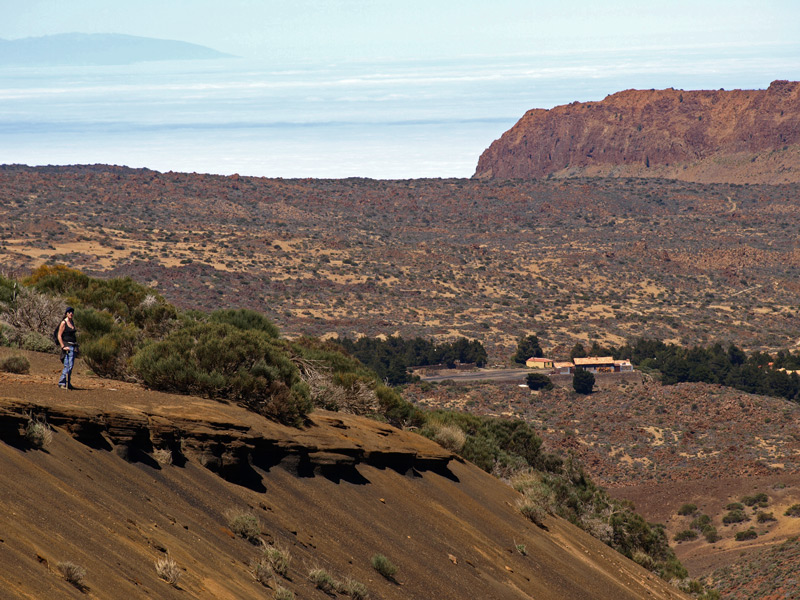
If you've never walked in the crater before be prepared for some surprises. The first is the sheer 'WOW' factor of standing in an epic landscape that is truly unique. Take the time to slowly survey the incredible terrain and the most fascinating and unlikely shapes are revealed; from surreal rock formations to rivers of knotted lava. And the colours are mind-blowing- it's hard to believe that Mother Nature could create so many contrasting tones out of just rock.
The second surprise after the vistas have stolen your breath away is that it doesn't come back...well not immediately anyway. Most hiking in the crater involves walking at altitudes which are 2000 metres plus; a height which is significantly higher than the UK's highest peak, Ben Nevis which reaches up a vertically challenged 1344 metres into the sky. The air is thin up there and although altitude sickness doesn't usually affect people until around the 2400 metre mark, there's no doubt that you can feel the effects when starting out on walks. Breathing can be just that bit more laboured until the body acclimatises, so take it easy at the start.
Another factor to be aware of is that the air is also incredibly dry in the crater. After a few minutes your lips will dry out quicker than had they undergone a Guanche's mummification process. Leave them and after an hour of running your tongue over them, they'll feel as though you're licking the volcanic landscape itself – Vaseline keeps you smooth and soft.
Shade is virtually non-existent in the crater, so don't forget the hat. In winter it might feel on the 'fresh' side when you set off, but the heat from that big golden ball in the sky will soon make itself known to you with a vengeance.
Finally, and sticking to the subject of the sun, even when there are clouds above the coast, the chances are the sun will be shining on the place where the earth holds up the sky. In fact the lower the clouds are, the more chance it'll be clear skies in the crater (here's a simple tip if you want to walk in sunshine: if you can see cloud above Teide, don't go. If you can't see Teide for cloud, it should be sunny).
Stock up with plenty of water before setting out. Ideally, fill up with some sweet spring water at a recreation zone en route and then you won't have to sell the hire car in order to be able to afford a bottle of 'agua' from the Parador café.
After that, you're ready to leave the crowds behind and travel deep into one of the most unique walking terrains you'll find anywhere...on this planet at least.
Real Tenerife Island Walks - Walking Routes in the Teide National Park now available to buy for direct delivery by email within 24 hours
Sunday, 11 April 2010
Tenerife Walking Guides - Teide National Park.

I seem to have some kind of timing mechanism in my head which, if it doesn’t get away from a screen and into the mountains or valleys of Tenerife on a regular basis, starts to emit a dull whining sound which blocks all creative thought.
Of course, that’s just an elaborate way of saying that I can only survive so long before going on a walk – it’s food for the soul.
We’ve been trying to put the finishing touches to our latest Tenerife walking guide – Hiking Highs;Teide National Park – but we’ve been incredibly busy for months now (yay!!) and haven’t had time to map out the final route…until last Monday when we broke free and headed up into the crater.
We’d timed it perfectly as the high cloud that’s been hanging around for a couple of days finally lifted and Teide National Park lay below her customary intensely blue sky. The last vestiges of snow on the peak are diminishing daily as the sun climbs higher and now the spring flowers have burst into bloom. This is a wonderful time of year to go walking in the National Park.
Setting off from the El Portillo Visitor centre, the large white flowers of Teide broom and the elegant indigo stems of Tajinaste Azul accompanied us as we climbed gently above the crater, the twin peaks of La Palma emerging above the sea of clouds on our horizon.
It’s an incredible feeling to be in such a surreal landscape with the sun on your back and only the lizards and canaries for company. Mount Teide was her usual, stunning best and from our vantage point we could clearly see the path that leads over Montaña Blanca before climbing steeply to the summit. Skirting the edge of a spectacular gorge of wind-eroded rocks, we arrived at the top of the Arenas Negras volcanic cone. Then we regressed to giggling childhood as half running, half surfing, we descended its black cinder face, covering a distance in 15 minutes that had taken us 40 minutes to ascend.
Teide National Park is so many things; an alien landscape; a geological masterpiece; home to a mysterious creature known as the mouflon; a hiker’s paradise and a giant playground where you can take a cable car white knuckle ride to see an archipelago in satellite mode and surf volcanoes. Where else on this planet can boast as much?
The ‘Hiking Highs;Teide National Park’ walking guide is now available to buy and have delivered directly to your email within 24 hours.
Sunday, 20 December 2009
Sunday Strolling

The eastern coast of Tenerife is the part that every visitor sees as they whiz along the TF1 motorway from the airport to their resort, and back again. Very few visitors ever spend any time there which means that, when it comes to walking, you’re quite likely to have the whole place virtually to yourself.
Last Sunday we wanted to do a short walk with a friend of ours who lives in the south of the island. The weather had been cloudy and damp just about everywhere on the island and the forecast was for more rain so we wanted somewhere that was a) our best shot at catching dry weather b) somewhere half way for us each to travel and c) in or around 2 hours maximum with a nice restaurant in which to end with lunch.
There was just one place that fitted the bill perfectly; the Güímar Malpaís.
Starting at the little port of El Puertito, we ambled across the badlands alongside the sea amidst great swathes of tabaiba, cardón and sea lettuce. In the spring and summer, the grasses are tall and green but in winter they’re brown and wispy, rippling the landscape in the breeze.
Crossing the lava fields we headed inland to Montaña Grande and skirted the base before heading back on a different route to the fish and seafood cafes and restaurants of Puertito. An idyllic little 2 hour circular stroll with views along the coast northwards to Las Teresitas beach and Santa Cruz and southwards to the lighthouse at Poris de Abona.
And if you’re staying in the south of the island, there’s a fantastic drive that takes you to El Puertito along the old Forgotten Road so you can combine touring with walking…perfect.

Friday, 23 October 2009
Fuzzy Walking Directions – A Recipe for Disaster

Let’s be honest here, most walking routes anywhere have been written out any number of times by any number of people over the years. It’s very rare to find a completely ‘new’ walking route, but that doesn’t mean to say that there’s not something fresh to say, or a different approach to take.
It’s the same with recipes. Most recipes are variations on ones which have been handed down through families or recorded in cook books over aeons. But that doesn’t mean that there’s nothing new about the recipe. A dash of cumin here, a sprinkling of fresh herbs there and you’ve got something which improves on the original.
I bet you’re wondering where I’m going with this…hang on in there, I’ll get there in the end.
The recipe analogy came into my head the other day as I surveyed a bewildering noughts and crosses grid of identical looking paths heading in all sorts of directions. I’m sure from the air it must have looked like one of those ‘landing strip for flying saucers’ images from Erich Von Däniken’s Chariots of the Gods.
I was heading up to the summit of Montaña Guaza beside Los Cristianos and had reached a crossroads of paths which had me scratching my head in confusion.
You might be thinking, ‘surely if you’re heading to the summit of a mountain, it’s pretty obvious which way to go… up’.
And normally I’d agree, but in this situation I was following instructions which very clearly told me, against my better judgement I have to add, to ignore the obvious and then held me tightly by the hand until they deserted me at the crisscross of paths at which point they ran off into the distance feebly shouting ‘I’ll meet you again when the path becomes a bit clearer.’
It was like following a recipe for a curry which, when it got to the stage of adding the exotic seasonings, told you to ‘now add some spices’ but didn’t tell you which ones.
I was pretty peed off, especially as It’s not the first time this has happened with these particular ‘walking instructions’ and decided to do what Andy and I regularly decide to do when trying to work out what we think is the best walking route – follow our instincts. More often than not this ends up being our way of adding those extra tasty spices and handfuls of aromatic fresh herbs.
As it turned out the route we would have followed, had the directions not told us otherwise, was the most direct and was much, much simpler. God knows why we were encouraged to go off on some wild goose chase.
But once again this is exactly one of the reasons we are putting together a series of walking routes for Tenerife which we think are more user friendly than… well anything we’ve come across yet.
We’ve specifically designed them so that they look great and are full of beautiful photographs and interesting snippets of information about the area and what people should look out for.
However, the most important aspect of them for us is this.
Unlike the instructions we were using which basically just ignored the fact that there were paths in all directions, we want to be there holding your hand, saying ‘don’t worry; we’ll stick with you all the way, especially when the path ahead is unclear.’
P.S. Our version of which route to take up Montaña Guaza is now available as part of our new ‘Island Walks – The Old South Routes’.
Sunday, 11 October 2009
Tenerife Lizards
Wherever you walk on Tenerife it’s a fairly safe bet that you’ll be accompanied by lizards scuttling around in the undergrowth and playing ‘chicken’ across the path in front of you.
It never ceases to amaze me how these painfully shy creatures suddenly turn into your best mates the moment you get your butties out of the rucksack. I reckon it’s evolution; lizards have learned that the crinkle of foil or the rustle of plastic equals crumbs.
Yesterday was hike-athon day for us. Three hikes in one day, an arduous feat as my buttocks will now attest. The final hike was from San Miguel de Abona to La Centinela Mirador and as we sat on a bench overlooking the southern landscape I remembered the last time we were here. We’d sat down on the same bench to eat our lunch and within seconds lizards popped up from everywhere grabbing the crumbs we threw and disappearing back into the undergrowth with them.
One time we were hiking through an overgrown barranco in Guimar and we nearly stepped on a lizard that was peeking out from a crevice in the path. We stopped and Jack started photographing it at close range. We were amazed how confident the little fellow was. He didn’t move at all despite the close proximity of the camera lens. We must have been there for 3 or 4 minutes before I sensed that something was wrong. The lizard was actually trapped. He’d got the top half of his body through the crevice and was firmly stuck. Who knows how long the poor thing had been there and more importantly, how long he would still be there had we not come along. This was an abandoned barranco that was extremely difficult to navigate and clearly hadn’t been traversed for a very long time. In all likelihood he would have starved to death there.

Jack carefully dislodged a couple of rocks and the lizard wriggled free. For a moment he just stood there, as if he couldn’t quite believe what had just happened, and then he was off, scuttling into the undergrowth and away, already composing the narrative he would tell his children and grandchildren.
The experience gave us a warm glow, a combination of feeling really good that we’d just saved a life and mortification that we’d spent several minutes photographing the poor thing in the throes of his ordeal.
So next time you’re hiking, keep an eye out and pack some extra crumbs for the lizard life.
And if you're interested in some walking routes in the south of Tenerife, you'll love our selection of the best southern walks in 'The Old South' - only €2 including your FREE copy of our favourite Tenerife coastal walks, 'Captivating Coastline'. Buy online for delivery to your in box.
It never ceases to amaze me how these painfully shy creatures suddenly turn into your best mates the moment you get your butties out of the rucksack. I reckon it’s evolution; lizards have learned that the crinkle of foil or the rustle of plastic equals crumbs.
Yesterday was hike-athon day for us. Three hikes in one day, an arduous feat as my buttocks will now attest. The final hike was from San Miguel de Abona to La Centinela Mirador and as we sat on a bench overlooking the southern landscape I remembered the last time we were here. We’d sat down on the same bench to eat our lunch and within seconds lizards popped up from everywhere grabbing the crumbs we threw and disappearing back into the undergrowth with them.
One time we were hiking through an overgrown barranco in Guimar and we nearly stepped on a lizard that was peeking out from a crevice in the path. We stopped and Jack started photographing it at close range. We were amazed how confident the little fellow was. He didn’t move at all despite the close proximity of the camera lens. We must have been there for 3 or 4 minutes before I sensed that something was wrong. The lizard was actually trapped. He’d got the top half of his body through the crevice and was firmly stuck. Who knows how long the poor thing had been there and more importantly, how long he would still be there had we not come along. This was an abandoned barranco that was extremely difficult to navigate and clearly hadn’t been traversed for a very long time. In all likelihood he would have starved to death there.

Jack carefully dislodged a couple of rocks and the lizard wriggled free. For a moment he just stood there, as if he couldn’t quite believe what had just happened, and then he was off, scuttling into the undergrowth and away, already composing the narrative he would tell his children and grandchildren.
The experience gave us a warm glow, a combination of feeling really good that we’d just saved a life and mortification that we’d spent several minutes photographing the poor thing in the throes of his ordeal.
So next time you’re hiking, keep an eye out and pack some extra crumbs for the lizard life.
And if you're interested in some walking routes in the south of Tenerife, you'll love our selection of the best southern walks in 'The Old South' - only €2 including your FREE copy of our favourite Tenerife coastal walks, 'Captivating Coastline'. Buy online for delivery to your in box.
Sunday, 4 October 2009
If the Cap Fits…
I love hats. All my life I’ve wanted to own and wear hats and have spent countless hours in front of shop mirrors trying berets, caps, trilbys, cowboy hats, top hats and beanies. But the sad fact is I really don’t suit hats. So when I find one that looks okay, I tend to stick to it.
And that’s why the cap I wear when I go hiking which was once velvety black is now faded to grey, scruffy and dirty (despite its intimate knowledge with the inside of the washing machine) and has travelled much of the world with me over the countless years that I’ve owned it.
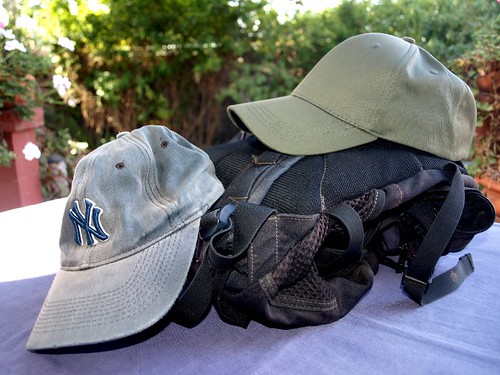 Last week I was rummaging through the various boxes of goodies in the ‘Todo a Euro’ sale at the local Al Campo supermarket and distractedly pulled a khaki coloured baseball cap from a box and put it on.
“My God,” said Jack. “That actually looks good on you.”
With a grin of delight I threw the cap into the shopping basket and went back to get one in a different colour for Jack.
When I got home I took the old caps off the rucksack handle where they permanently live and replaced them with the clean, shiny new ones.
I felt a twinge of regret as I threw the old ones into the back of the wardrobe and a slight worry that the newness of the cap would only serve to emphasise the age of the rest of the outfit.
Hmm, I fear this could end up costing me a lot more than the Euro I paid for the cap.
And that’s why the cap I wear when I go hiking which was once velvety black is now faded to grey, scruffy and dirty (despite its intimate knowledge with the inside of the washing machine) and has travelled much of the world with me over the countless years that I’ve owned it.
“My God,” said Jack. “That actually looks good on you.”
With a grin of delight I threw the cap into the shopping basket and went back to get one in a different colour for Jack.
When I got home I took the old caps off the rucksack handle where they permanently live and replaced them with the clean, shiny new ones.
I felt a twinge of regret as I threw the old ones into the back of the wardrobe and a slight worry that the newness of the cap would only serve to emphasise the age of the rest of the outfit.
Hmm, I fear this could end up costing me a lot more than the Euro I paid for the cap.
Thursday, 20 August 2009
Walking on Tenerife – Favourite Refreshment Stops
At Real Tenerife, we love that feeling when you come to the end of a long, immensely satisfying walk when the end is in sight and you know that in a few moments you can slip out of the hiking boots and into some soft sandals – it’s a bit like ‘skinny dipping’ for the feet. However, what’s even better is to plonk yourself down at a welcoming hostelry and order an ice cool beer as a reward.
It’s something we feel is an integral part of a really good walking package – spectacular vistas, diversity of landscape, interesting curios along the way, challenging but not soul destroying terrain, attractive flora and fauna and a cosy little bar to collapse into at the end.

We have a few personal favourites across the island.
In the Anaga Mountains, the Cruz del Carmen restaurant is a sanctuary for walkers and local forestry workers, especially when the bruma descends and chills through to the bone. We’ve found ourselves held prisoner by the ambience here for a couple of hours after we’ve finished a walk in the past - the horizontal rain outside the window didn’t help with motivating us to leave.
There are great other little bars in tiny hamlets as well, places where you feel you’re their first customer in days. In a bar in Chamorga, the owner had to break off from painting her nails to serve us. Another fave is Casa Carlos on the road which runs along the Anaga’s spine. On a clear day, the views of the lush mountains are something quite special.
Up above Santiago is one of the most popular walkers’ bars on Tenerife, Bar Fleytas. It’s perfectly placed as a starting and finishing point for exploring the Erjos Pools and the Valle de Santiago – and they have great home made almendras.
In Teno Alto the little bar is more like a mix of corner shop (not a lot of items) and bar. Grab a beer and sit on a wall in the sunshine as abuelas wander by with clumps of aromatic herbs in their hands – it epitomises the simple pleasures in life.

At Ifonche in Adeje, the Tasca Taguera is a higgledy piggeldy mix of cable drums turned into tables and vine covered terrace where bags of water hang like decorations (apparently to keep the mosquitoes away). It’s the most bohemian feeling walker’s bar we’ve frequented.
My favourite of all is the La Caldera bar and restaurant. For me it’s just the perfect walker’s rest. Log cabin exterior, chunky wooden tables and benches, a roaring log fire inside (essential for winter months when the cloud descends), fresh trout on the menu and any number of little birds like Canary Island Tits, Blue Chaffinches, Capirotes and Robins looking for easy pickings. We never go into the place before setting off on a walk as the walk would probably never happen if we did.
There are more great little places and I’m sure others have their own personal favourites. We’d love to hear about any little gems that any of you walkers out there might know about.
It’s something we feel is an integral part of a really good walking package – spectacular vistas, diversity of landscape, interesting curios along the way, challenging but not soul destroying terrain, attractive flora and fauna and a cosy little bar to collapse into at the end.

We have a few personal favourites across the island.
In the Anaga Mountains, the Cruz del Carmen restaurant is a sanctuary for walkers and local forestry workers, especially when the bruma descends and chills through to the bone. We’ve found ourselves held prisoner by the ambience here for a couple of hours after we’ve finished a walk in the past - the horizontal rain outside the window didn’t help with motivating us to leave.
There are great other little bars in tiny hamlets as well, places where you feel you’re their first customer in days. In a bar in Chamorga, the owner had to break off from painting her nails to serve us. Another fave is Casa Carlos on the road which runs along the Anaga’s spine. On a clear day, the views of the lush mountains are something quite special.
Up above Santiago is one of the most popular walkers’ bars on Tenerife, Bar Fleytas. It’s perfectly placed as a starting and finishing point for exploring the Erjos Pools and the Valle de Santiago – and they have great home made almendras.
In Teno Alto the little bar is more like a mix of corner shop (not a lot of items) and bar. Grab a beer and sit on a wall in the sunshine as abuelas wander by with clumps of aromatic herbs in their hands – it epitomises the simple pleasures in life.

At Ifonche in Adeje, the Tasca Taguera is a higgledy piggeldy mix of cable drums turned into tables and vine covered terrace where bags of water hang like decorations (apparently to keep the mosquitoes away). It’s the most bohemian feeling walker’s bar we’ve frequented.
My favourite of all is the La Caldera bar and restaurant. For me it’s just the perfect walker’s rest. Log cabin exterior, chunky wooden tables and benches, a roaring log fire inside (essential for winter months when the cloud descends), fresh trout on the menu and any number of little birds like Canary Island Tits, Blue Chaffinches, Capirotes and Robins looking for easy pickings. We never go into the place before setting off on a walk as the walk would probably never happen if we did.
There are more great little places and I’m sure others have their own personal favourites. We’d love to hear about any little gems that any of you walkers out there might know about.
Tuesday, 28 July 2009
Walking in the Hills and Mountains on Tenerife
If I had a euro for each time that I read that it can be cool during the day on Mount Teide even in summer, I’d be rich. Well I might not be rich, but I’d be able to pay for a nice meal.
It’s one of those Tenerife myths of which there are a few. It’s usually advice given by well meaning people, but where they got this idea I really don’t know and anyone walking at altitude on Tenerife in summer expecting it to get cooler the higher they climb is in for a shock.
This post is a sort of companion to a recent post about taking precautions at this time of year, but with the temperatures blowing the top off the thermometers we felt that it was important to reinforce the message that during the height of summer, the higher you go the hotter it is likely to get and it’s essential to realise this.
Last weekend we had planned to camp on the North West slopes and do some walking in that area in preparation for the next in our walking guides. Unfortunately I developed a 24 hour tummy bug and didn’t feel up to a long trek. But we headed into the area anyway to go to the splendid little Dia de la Trilla fiesta near El Tanque at around the 1100 metres mark.
It had been 30+ degrees at the coast, but as we drove higher with both car windows open and my arm leaning out of the window, the air rushing past became hotter and hotter until it felt as though someone was pointing a hairdryer at it. By the time we reached the fiesta the temperature was in the 40s and we bought a couple of straw hats to protect our heads.
Within moments, even with the hats, we were a pair of sweaty messes. At that point it occurred to us that my tummy bug had been a blessing in disguise. To walk in these temperatures would have been madness. It is incredibly hot at the moment, even for summer and most of the time you can still enjoy walking on Tenerife at this time of year as long as you are prepared. But don’t head into the hills expecting some relief from the heat or you might find that it feels as though you’ve literally stepped from the frying pan into the fire.
It’s one of those Tenerife myths of which there are a few. It’s usually advice given by well meaning people, but where they got this idea I really don’t know and anyone walking at altitude on Tenerife in summer expecting it to get cooler the higher they climb is in for a shock.
This post is a sort of companion to a recent post about taking precautions at this time of year, but with the temperatures blowing the top off the thermometers we felt that it was important to reinforce the message that during the height of summer, the higher you go the hotter it is likely to get and it’s essential to realise this.
Last weekend we had planned to camp on the North West slopes and do some walking in that area in preparation for the next in our walking guides. Unfortunately I developed a 24 hour tummy bug and didn’t feel up to a long trek. But we headed into the area anyway to go to the splendid little Dia de la Trilla fiesta near El Tanque at around the 1100 metres mark.
It had been 30+ degrees at the coast, but as we drove higher with both car windows open and my arm leaning out of the window, the air rushing past became hotter and hotter until it felt as though someone was pointing a hairdryer at it. By the time we reached the fiesta the temperature was in the 40s and we bought a couple of straw hats to protect our heads.
Within moments, even with the hats, we were a pair of sweaty messes. At that point it occurred to us that my tummy bug had been a blessing in disguise. To walk in these temperatures would have been madness.
 It is incredibly hot at the moment, even for summer and most of the time you can still enjoy walking on Tenerife at this time of year as long as you are prepared. But don’t head into the hills expecting some relief from the heat or you might find that it feels as though you’ve literally stepped from the frying pan into the fire.
Tuesday, 26 May 2009
Walking in Tenerife – If You Go Down to the Woods Today…
 Last week walking in the upper La Orotava Valley we passed a young German couple walking the route in the opposite direction. We said hello, or more accurately 'Buenas Tardes' (when in Rome and all that) and carried on.
About an hour and a half later, and about thirty minutes walk from the end of the route, we were stopped in our tracks by somebody shouting at us. It was the young German couple. The girl came running through the forest to join us.
“Hi again, can you help us? Do you know the way to La Caldera?” She asked.
“Err, yes…I hope so any way,” I replied, I wasn’t yet 100 percent convinced that we were definitely on the right track ourselves – there are a lot of intersecting paths in those woods. “But I thought you were going in the other direction?”
“We were,” she laughed. “But the descent looked very dangerous, so we turned back. But now everything looks very different in this direction.”
At that point her boyfriend/husband/pal joined us. He had a map in his hand. He looked at it, turned it on its side and looked at it again, then stared at the path ahead.
“We are wanting to go here,” he pointed at a tent symbol on the map.
“Can I have a look?”
He handed me the map.
It was a good map of Tenerife for sure, one of the better ones I’d seen. It had the La Caldera zona recreativa marked on it, but it wasn’t Ordnance Survey. Apart from the little tent to show there was a camping area at La Caldera, there weren’t any paths shown through the woods; the scale was far too small. As a walking guide it was useless. A one way ticket to ‘getting lostville’.
At the junction where we stood there were paths leading in four directions; none were signposted.
We pointed them in the right direction and they went off at a pace; they’d clearly had enough of their time traipsing around woods.
Tenerife is a fantastic place for walking, but even if you’re an experienced walker, you do have to be prepared. Routes can start off with clear signposts pointing to wide tracks and then, when you’re deep in the forest, the tracks and the forest floor can gradually blend into one another and signposts annoyingly go missing.
A bog standard map, even a relatively detailed one, just isn’t a good enough tool for helping people find their way around the countryside.
Thursday, 21 May 2009
Walking on Tenerife: No Entry...Fact or Fiction?
 One of the great things about walking on Tenerife is that there are very few barriers to where you can hike. Unlike Britain where some farmers can make you feel about as unwelcome as a fox in the hen shed, the countryside here is, on the whole, a place to be enjoyed by everyone.
Clearly there are places which are off limits and common sense and ‘privado’ signs should help avoid embarrassing forays into people’s fincas, but apart from that walkers are free to explore the great outdoors…except for when there are Cabildo workers in the area and paths are suddenly blocked off.
It’s happened to us on a few occasions, the trouble is you never know that a path is going to be closed until you reach the sign telling you and that can be quite a way into the route. Take yesterday for example. We’d been walking for an hour and a half, having ascended a muscle challenging and lung busting 600 metres, before we found our progress blocked by a sign across the forest path which read “Alto! – No Pasar”.
There had been no previous warning, nada and suddenly here was a sign which was ostensibly telling us to turn back. Having come this far without any prior warning that the route was closed, we weren’t happy bunnies.
So what do you do when this happens?
Well we’ve been here before and have an idea what signs to look for to determine if it’s a serious warning, or just something designed to put you off so that you don’t disturb the forest workers doing whatever it is they’re doing.
In this case there were two things that told us that this might not be a serious deterrent to continuing:
- There was no actual evidence of any forest workers in the area.
- We’d passed some Spanish hikers coming the other way and they didn’t mention that the path was closed.
Sure enough, apart from a couple of bags of cement and three green forestry sacks, there were no sign of any workmen; nine times out of ten there never are, so you can come to your own conclusions about what purpose these signs actually serve. A few kilometres, and half a dozen hikers later, we came to the ‘sister’ sign warning walkers coming in the opposite direction. In this case there was no reason at all for blocking the path.
If you don’t know an area very well, it’s a difficult call as to whether you pay attention to these signs if you’re unlucky enough to come across one. The best I can advise is to apply common sense.
If there is any work taking place, there will be workmen around and they’ll tell you where you can and can’t go, but they’re never heavy about it, so most of the time it’s worth taking the chance and continuing.
Like I said, we’ve encountered this on maybe four or five occasions…on not one of those did we actually have to turn back.
Monday, 11 May 2009
Walking in the Teide Crater - An out of this world plant for an other-worldly landscape
The next few weeks are an ideal time to explore Las Cañadas del Teide on foot. In truth any time of year is perfect for venturing deep into the incredible landscape which makes up Teide National Park and after a few minutes walking from even the busiest tourist hot spots you’ll soon find that you have the awe inspiring scenery all to yourself.
But what makes the next few weeks extra special is the flowering of the incredible tajinaste plant. On terrain as epic as this it takes something special to drag the eye away from the basaltic lava fields and the coils of pahoehoe spilling down the mountainside like dried wax. The tajinaste is more than up to the challenge. Its vibrant red spikes mock its surroundings, a loud splash of colour against an earthy canvas. It’s an alien life form in an other-worldly environment and even when you photograph it, the results don’t look real, like a Photoshop creation instead of nature’s.
 And if you think I’m exaggerating, go see for yourself. You’ve probably got until about mid June to see the tajinaste fields at their best.
But what makes the next few weeks extra special is the flowering of the incredible tajinaste plant. On terrain as epic as this it takes something special to drag the eye away from the basaltic lava fields and the coils of pahoehoe spilling down the mountainside like dried wax. The tajinaste is more than up to the challenge. Its vibrant red spikes mock its surroundings, a loud splash of colour against an earthy canvas. It’s an alien life form in an other-worldly environment and even when you photograph it, the results don’t look real, like a Photoshop creation instead of nature’s.
 And if you think I’m exaggerating, go see for yourself. You’ve probably got until about mid June to see the tajinaste fields at their best.
Wednesday, 6 May 2009
How to get lost walking in Tenerife
 Here’s a confession which might raise a Roger Moore style eyebrow from anyone thinking of buying any of our Real Tenerife Walking guides…I have become lost many times during my exploration of Tenerife’s wonderful countryside.
I’ve followed forest paths in the Anaga Mountains where the vegetation has just become thicker and thicker as the path got smaller and smaller until I had to concede that a bird’s trail through some leaves didn’t constitute a path. I’ve trekked three hours to see the incredible Paisajes Lunar only to find the path ended at an outcrop above said rock formations…so close and yet so far (a bit of dry slope skiing sorted that dilemma out). I’ve reached crossroads in the middle of the forest above Garachico where every direction looked like a mirror image of the other three. My best was to spend an hour walking through dense laurel forest to end up at an outcrop about 20 metres from where I started.
Not much of a vote of confidence you might think; however there’s another side to this story.
On every occasion I had route instructions in my possession. Some were freebies provided by the Island’s government, some were ones which I’d bought.
 In some cases I was following signs which basically gave up the ghost at various points during the route, in others the route had been mysteriously changed by the powers that be and I ended up on a wild goose chase. In one ‘squeaky bum’ experience, the official route I was following fell away and I was left to inch my way along a narrow water course above a sheer drop into a bottomless abyss (the imagination doesn’t help at times like that).
I have certificates for map reading, so I always take a compass with me…not that it’s always helped; on one occasion the compass icon on the ‘route map’ I was using had north in the wrong place; which I didn’t notice until I’d gone way wrong. Eventually though, I’ve always found the right route.
The point is this there’s a big country out there. The more rewarding routes sometimes have the fewest walkers and, especially where there are forests involved, finding the right path is not always as easy as it might sound.
I guess what I’m really saying is that I’ve gotten lost walking all over Tenerife so that you won’t.
Sunday, 5 April 2009
Walking on Tenerife - San Miguel to Mirador Centinela
 One of the factors which makes Tenerife ideal for walkers is that, within reason, you can pretty much walk everywhere. You don’t tend to get red faced farmers jumping up and down waving sticks at you.
Camino Reales (old trading routes) and goat trails from past centuries have left a network of paths across the whole of Tenerife. Some are quite short and perfect when you want to stretch the legs, but aren’t in the mood for a 20 kilometre hike.
One of these is the camino real linking San Miguel de Abona and the Centinela Mirador in the south of Tenerife.
Armed with a route guide we picked up free from a tourist office we headed up hill to the starting point at San Miguel.
I’ve got a soft spot for San Miguel. It was the subject of our first location report for Living Tenerife Magazine and it was the place that made me realise that even in the main tourist areas in the south, you don’t have to travel far to find the Real Tenerife.
What happened next highlighted something we’d been saying ever since we started exploring this island on foot. Many of the officially produced guides are nice enough to look at, but are little more than guidelines in practice.
We couldn’t find the start of the route. There were no signpost and the directions in the guide didn’t match reality. We saw a postman so decided to ask him where the camino real was. You’ll never guess his reply…
“Hmmm, sorry…I don’t know where it is,” then he added a classic. “I don’t know this area very well.”
Talk about instilling confidence. We searched the area and eventually, after exploring a couple of back streets, settled on a road which looked promising. Within a few minutes we knew we’d chosen well. A tell tale cobbled path led into a barranco and soon we left the town behind and had descended into a barranco where the only sounds were the haunting cries of a pair of kestrels.
 It was fascinating to think of the traders who had treaded this path in the past. Despite being able to see the airport and some of the modern coastal resorts like El Médano way below us, it felt as though very little had changed up here in 100 years. The path snaked past old jablé terraces and rundown cottages emerging onto a tarmac road with no signs. It took a bit of searching to find where the camino real started again near a place called La Hoya where there was a small, mostly abandoned, settlement of traditional agricultural architecture and an old tile kiln.
Just past La Hoya there was a wonderful little rural hotel. It was in a beautiful location, but we wondered how much business it would get out here. However, when you think about it though it might be ideally placed; feeling as though it’s in the middle of nowhere, yet it’s only short drive from Tenerife’s modern resorts of Los Cristianos and Playa de Las Americas.
We continued along the path until we emerged just below the Centinela Mirador. If you were starting the walk from the mirador, you’d be hard pressed to notice where it started as whoever landscaped the area around Centinela had completely obscured the path.
Conveniently placed benches below the main building were ideal for having a rest and some lunch. We tucked into our bocadillos whilst also feasting on some of the best views of the south coast you’re likely to find.
It’s a great little walk and opens up a very different face of the south of Tenerife. One note of warning; the Centinela Mirador is a wonderfully scenic spot for lunch, but the second you unwrap the bocadillos you’ll find yourself starring in a lizard version of Hitchcock’s ‘The Birds’.
The San Miguel to Centinela walk is part of The Old South Island Walks, delivered to your email within 24 hours.
Thursday, 12 March 2009
Into the Valley - a Tenerife Walk

I’m waiting on the path for Jack to re-appear.
In the distance I can hear a great deal of rustling and the occasional muttered expletive.
Five minutes ago a large bird ran across the path in front of us and disappeared into the undergrowth, hotly pursued by Jack, camera in hand. Now I have a funny feeling that the distinct lack of stealth I can hear emanating from Jack’s traverse through the bushes is not exactly working in his favour.
Eventually he emerges.
“It was too fast for me” he sighs. “What do you think it was; a grouse, a Barbery Partridge?”
“I’m fairly sure it was Roadrunner” I reply.
Climbing out of the little hamlet of Arguayo we emerge onto a ledge which skirts Montaña de la Hoya.
8oo or so metres below us the Santiago Valley spreads its green, undulating mantle all the way to the Teno Mountain Range beyond it. Down the valley wall the road zigzags its way past the settlements of Tamaimo, El Retamar and El Molledo, while out to the west the sun is shimmering on the ocean’s surface at the resort of Playa de la Arena.
Up here, we feel like Gods. We’re standing on the edge of the world looking down on the painfully slow snake of Dinky-sized cars that are threading their way up the TF 82 behind a banana truck, and we’re smiling to ourselves at the sheer beauty of our surroundings.
All the way around the mountain the breathtaking views accompany us and we stop frequently to drink them in.
We’ve still got at least a couple of hours walking ahead of us, some of it involving hot, uphill slogs, but the memory of those views stay with us all the way, augmented by quaint villages, starkly contrasting black volcanic lava fields and meadows bursting with wild flowers, an ascent through Tenerife’s version of Helm’s Deep and the occasional fleeting glimpse of cartoon wildlife in the bushes.
This is a big walk through BIG country high above Tenerife’s southwest coast. The trail takes you through great swathes of fertile valley, the site of Tenerife’s last volcanic eruption, dense pine forests and deserted quarries, some of which now form natural pools which are a haven for wildlife and all the while, Mount Teide gazes benignly down on you while the islands of La Gomera and La Palma float on the horizon. Walks don’t come much better than this.
The Erjos to Arguayo walk is now available on PDF download for €2 and comes with your FREE copy of the best of Tenerife’s coastal walks.
Thursday, 12 February 2009
Walking on Tenerife – the benefits of having a ‘Leatherman’
I always carry a Leatherman with me when I’m out. I don’t mean just out walking on Tenerife, I mean at all times; you never know when they’re going to come in handy. They’re like the Swiss Army Knife’s meaner big brother. As Billy Conolly says, you never know when you’re going to have to get a stone out of a horse’s hoof.
Even though it’s winter here and the temperatures are in the low 20s, making it an ideal time for walking, when there’s not a cloud in the sky, it can feel a hell of a lot hotter and you get through water supplies at a disturbing rate.
We always work out where we can fill up with water when we’re out walking, so we knew that as we glugged down the last of the drops in the bottle, there was a communal fountain in the village we were approaching. Normally there’s a queue of locals filling up 8 litre bottles, but as luck would have it there was no-one, so we were able to go straight to the fountain and replenish our supplies with some very welcome sweet spring water…in theory.
In reality, the fountain’s tap didn’t have a handle. I tried to turn it with my fingers, but it wouldn’t budge; I clearly haven't been eating enough porridge or, as this is Tenerife, gofio. Now you’re probably thinking at this point that I thought of the Leatherman in my bag…wrong. We’d just hiked 20 kilometres plus under an unforgiving sun and my mind wasn’t functioning as it should have been; I completely forgot about the multi-tool in my bag which by this point was probably screaming ‘use me, you idiot’.
Thank goodness for the kindness of strangers. An elderly Canarian man eased himself off the wall where he’d been sitting in the sunshine watching my puny efforts and sauntered across to us just as a car pulled up. He said something to the driver, who handed him a pair of pliers. Problem solved.
“Muchas gracias,” I gasped as he opened the faucet and the life giving liquid poured into the bottle. “Tenemos mucho sed.”
Whether I would have remembered the Leatherman before we expired from thirst we’ll never know, but the important point is this; it’s always useful to have a Leatherman, or something similar to hand when out and about the countryside, there’s not always a benevolent local at hand to help out.
Even though it’s winter here and the temperatures are in the low 20s, making it an ideal time for walking, when there’s not a cloud in the sky, it can feel a hell of a lot hotter and you get through water supplies at a disturbing rate.
We always work out where we can fill up with water when we’re out walking, so we knew that as we glugged down the last of the drops in the bottle, there was a communal fountain in the village we were approaching. Normally there’s a queue of locals filling up 8 litre bottles, but as luck would have it there was no-one, so we were able to go straight to the fountain and replenish our supplies with some very welcome sweet spring water…in theory.
In reality, the fountain’s tap didn’t have a handle. I tried to turn it with my fingers, but it wouldn’t budge; I clearly haven't been eating enough porridge or, as this is Tenerife, gofio. Now you’re probably thinking at this point that I thought of the Leatherman in my bag…wrong. We’d just hiked 20 kilometres plus under an unforgiving sun and my mind wasn’t functioning as it should have been; I completely forgot about the multi-tool in my bag which by this point was probably screaming ‘use me, you idiot’.
Thank goodness for the kindness of strangers. An elderly Canarian man eased himself off the wall where he’d been sitting in the sunshine watching my puny efforts and sauntered across to us just as a car pulled up. He said something to the driver, who handed him a pair of pliers. Problem solved.
“Muchas gracias,” I gasped as he opened the faucet and the life giving liquid poured into the bottle. “Tenemos mucho sed.”
Whether I would have remembered the Leatherman before we expired from thirst we’ll never know, but the important point is this; it’s always useful to have a Leatherman, or something similar to hand when out and about the countryside, there’s not always a benevolent local at hand to help out.
Subscribe to:
Posts (Atom)


 Posts
Posts

